
Consumer | UX/UI Design
Enhancing customer experiences with a unified shop ecosystem
Unified existing platforms under a consolidated eCommerce solution. The project delivered a scalable, customer-centric architecture, tailored design concepts, and prioritised requirements to support loyalty, segmentation, and operational efficiency across the organisation’s D2C ecosystem.
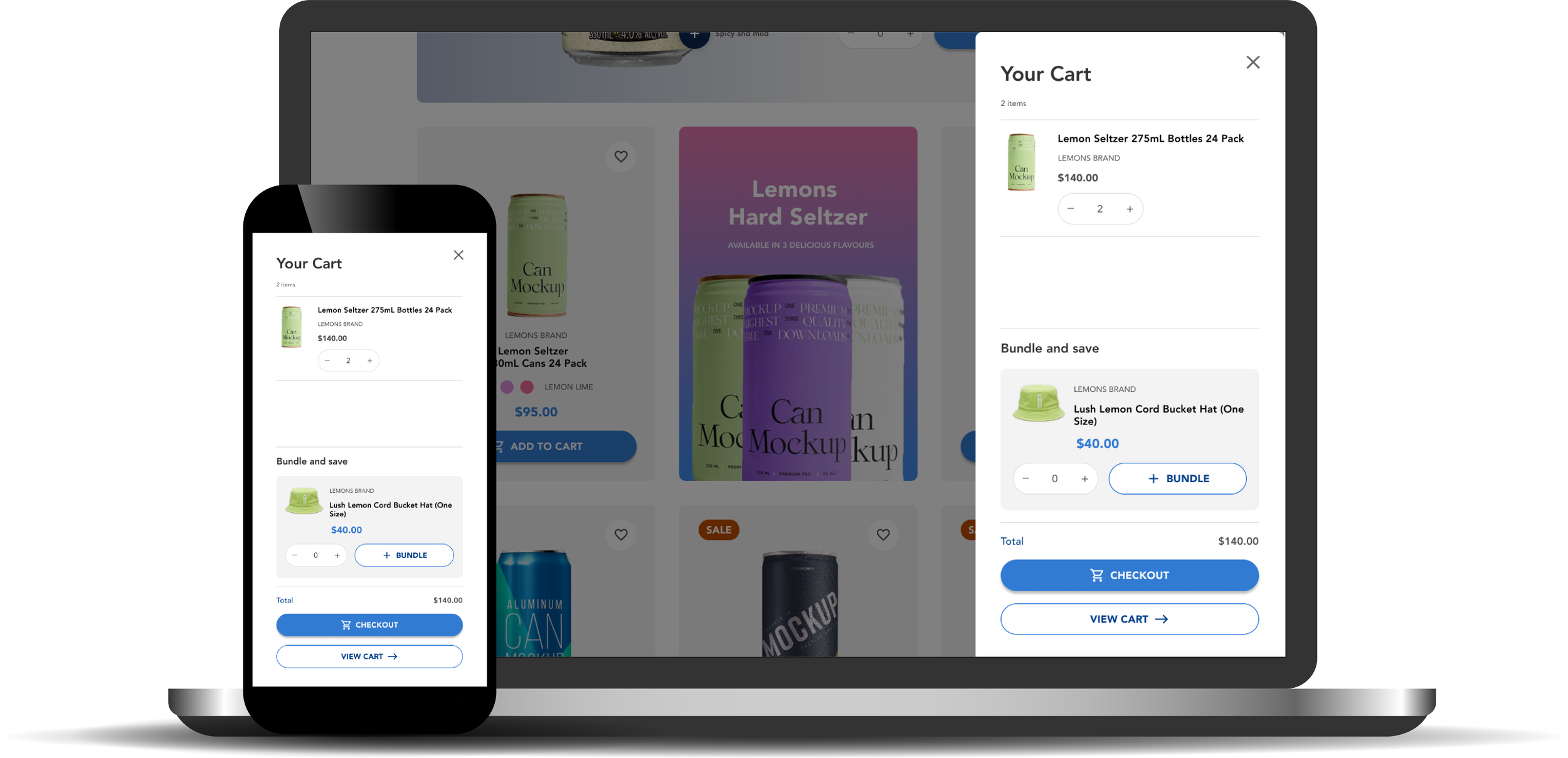
Project overview
Two separate platforms served distinct customer groups - staff and family members, and community sports clubs, each faced limitations in scalability, segmentation, and operational efficiency. Customers lacked personalised experiences, dynamic pricing, and streamlined access to rewards and promotions.
Role and team
As Lead UX Designer, I was responsible for shaping the user experience strategy and ensuring alignment with business objectives. My key contributions included:
User research: Conducted stakeholder interviews and platform walkthroughs to uncover pain points and define user needs.
Requirements gathering: Documented functional and non-functional requirements using the MoSCoW prioritisation method, ensuring clarity and alignment across teams.
Design concepts: Created initial responsive UI concepts for homepage, catalogue, checkout, and account creation, incorporating best practices for accessibility and conversion.
Journey mapping: Developed customer journey maps to visualise end-to-end experiences and identify opportunities for improvement.
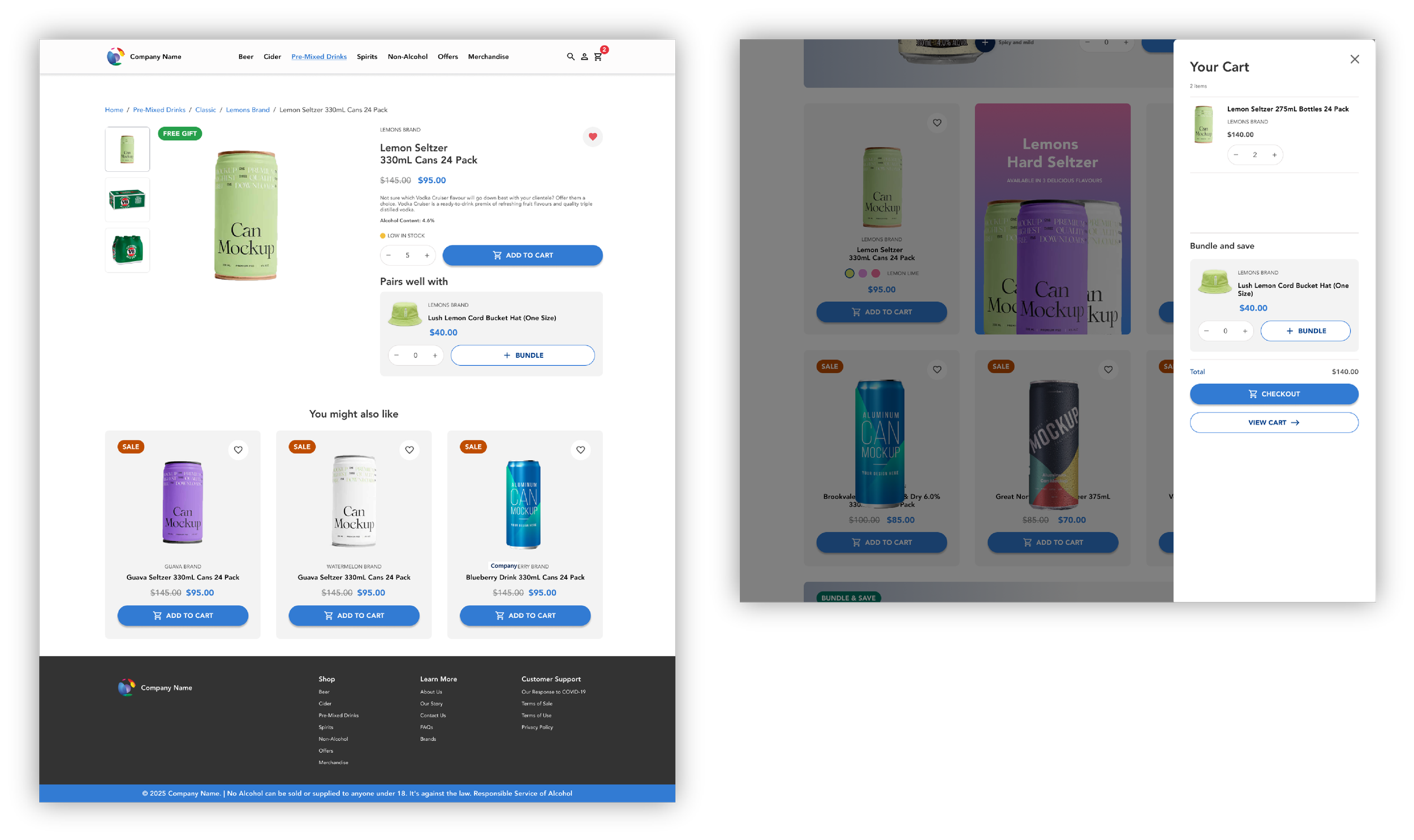
Design prototypes | Figma
Discover -
Stakeholder engagement and platform analysis
This project aimed to consolidate platforms into a unified eCommerce storefront, enabling shared integrations, centralised reporting, and enhanced user experiences. Our team conducted stakeholder interviews, platform demos, and technical workshops to define the future-state experience, solution architecture, and implementation roadmap.
We engaged key stakeholders across Customer Experience, Brand, Digital Products, and Innovation. Interviews and platform walkthroughs revealed key pain points: siloed product data, limited segmentation, and manual reward tracking. These insights shaped the foundation for future-state design.
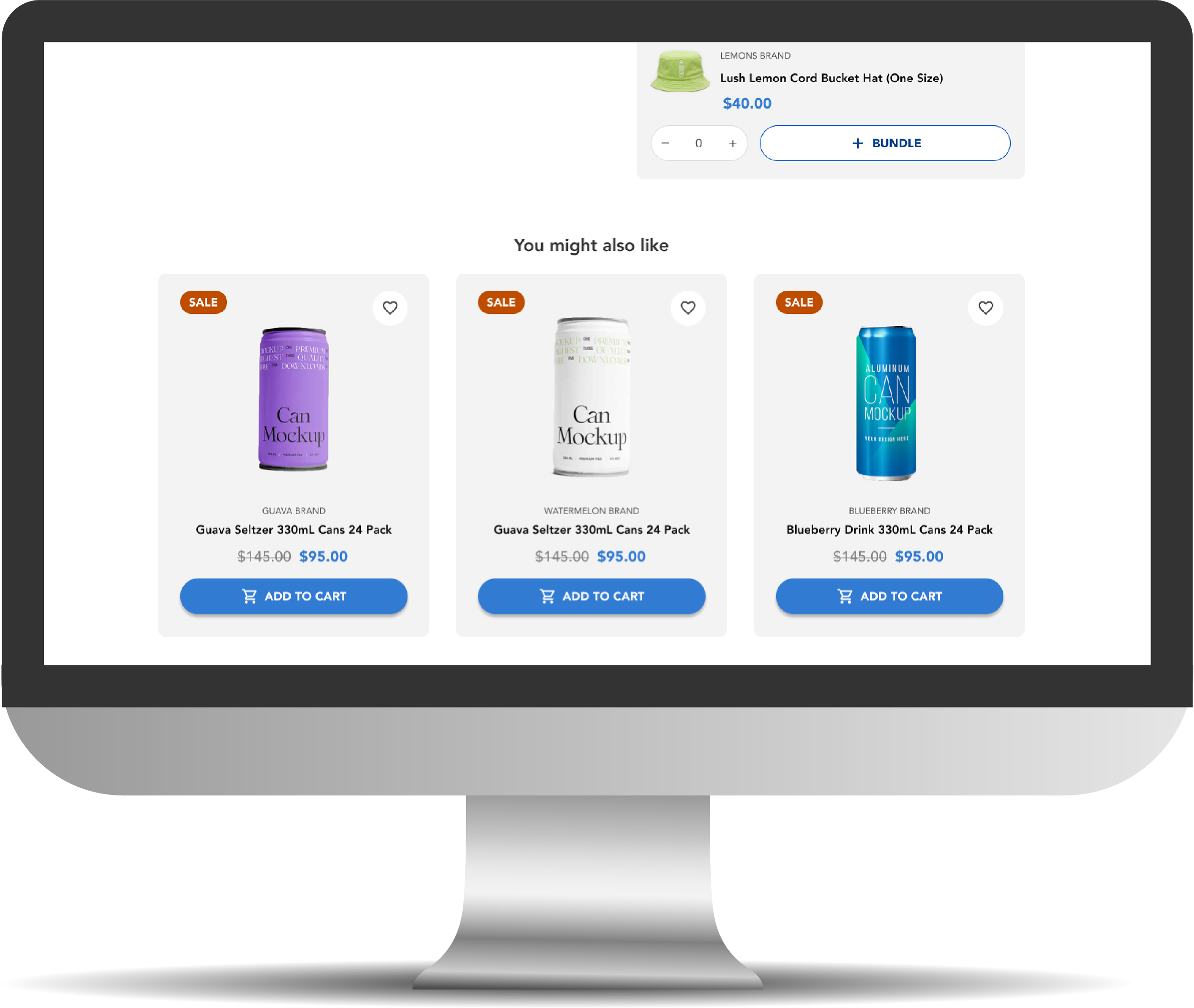
Design prototypes | Figma
Define –
Experience needs and business objectives
Customer groups required tailored benefits and workflows, while business goals focused on dynamic pricing, automated promotions, and improved reporting.
Requirements were documented and prioritised using the MoSCoW method, ensuring clarity and alignment with the eCommerce solution’s capabilities and business needs.
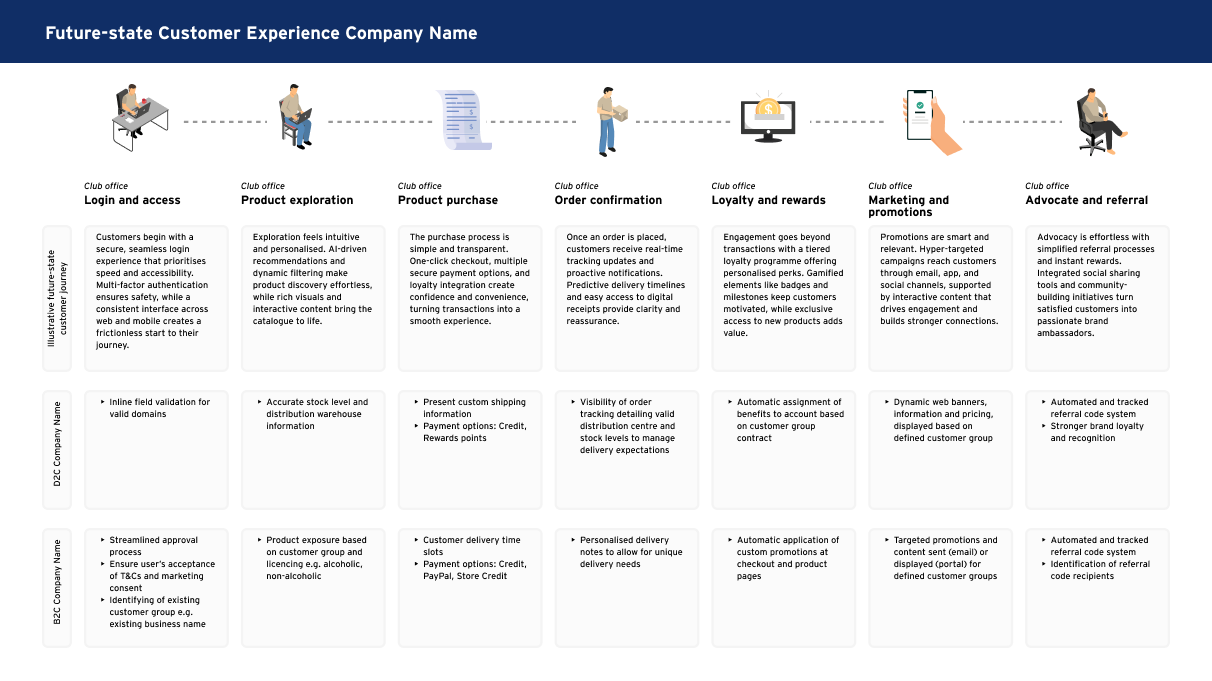
Mapping future-state requirements | User Journey Map
Ideate and validate –
Design concepts and architecture
Responsive UI concepts were created for homepage, catalogue, checkout, and account creation. Our designs were continuously validated with our technical analysts to ensure feasibility and alignment with the eCommerce solution’s features.
The proposed architecture featured a consolidated admin console, shared APIs, and reusable customisations across stores. The chosen eCommerce solution and its capabilities were leveraged for automation and conversion optimisation.
Multiple playback sessions and a final showcase aligned stakeholders on progress and design direction. Feedback informed refinements to customer journeys, segmentation logic, and integration priorities.
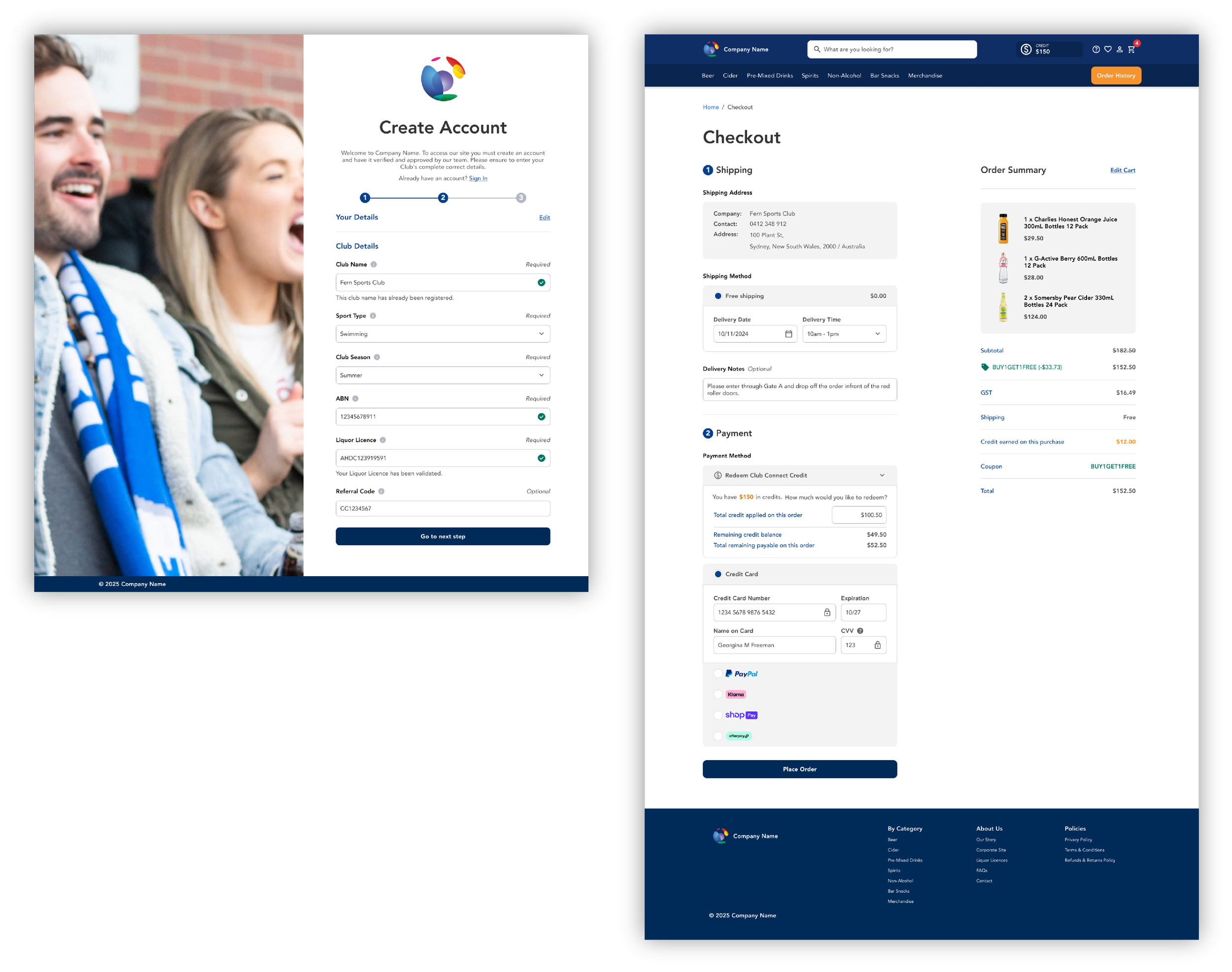
Design prototypes | Figma
Deliver –
Implementation roadmap and design asset
We presented three roadmap options to support different levels of consolidation and optimisation. Each option included:
Detailed design concepts for key pages and workflows, ensuring responsive and accessible experiences.
Prioritised business requirements documented using MoSCoW, providing clear guidance for development sprints.
Implementation pathways covering design, development, testing, and post-launch support, allowing flexibility based on budget and strategic priorities.
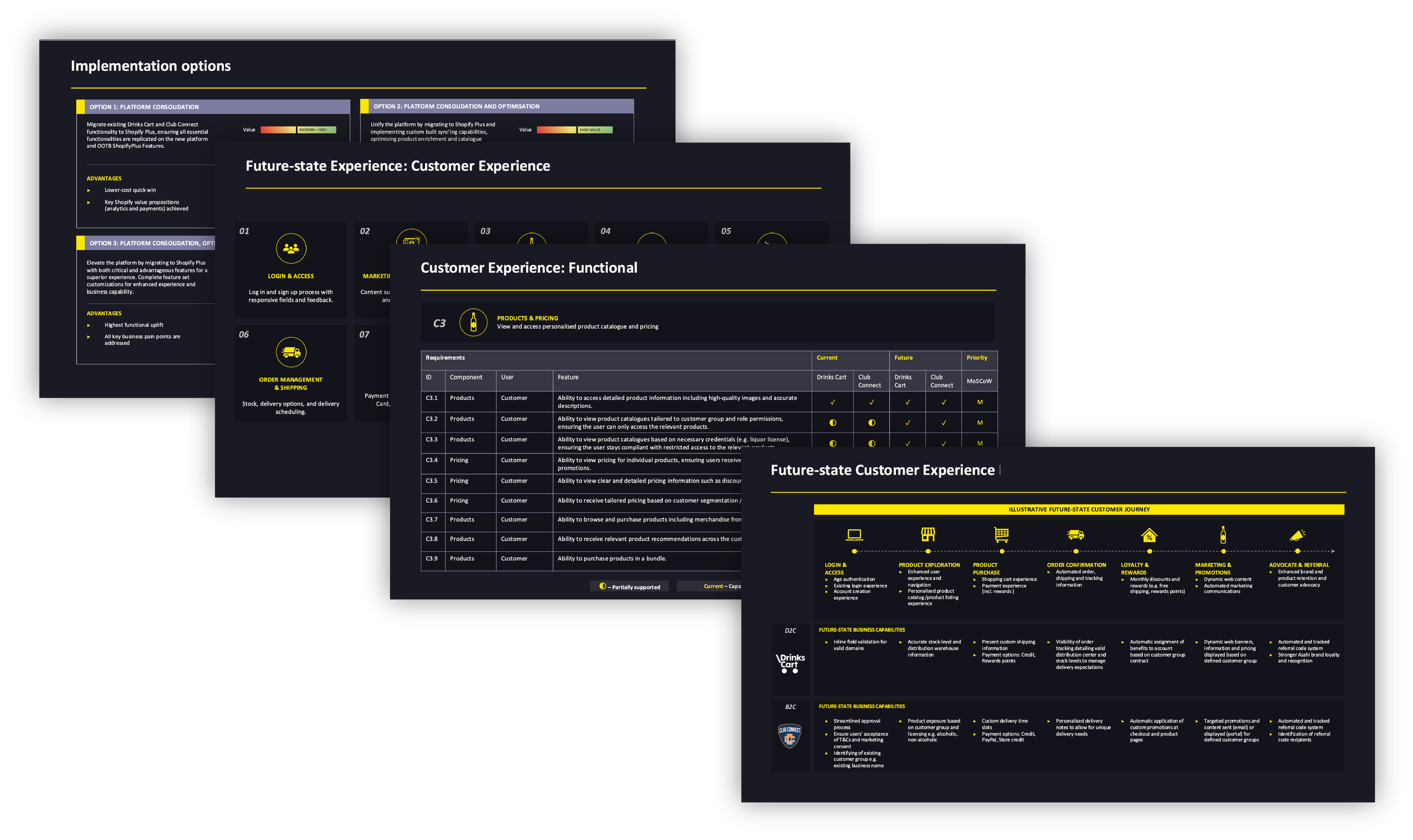
Discovery and design report
Our solution
The proposed eCommerce solution delivers a consolidated, scalable platform that supports personalised experiences, automated promotions, and flexible content management. By combining strategic design, technical architecture, and human-centred principles, the solution empowers the organisation to deepen customer engagement and respond quickly to market needs.
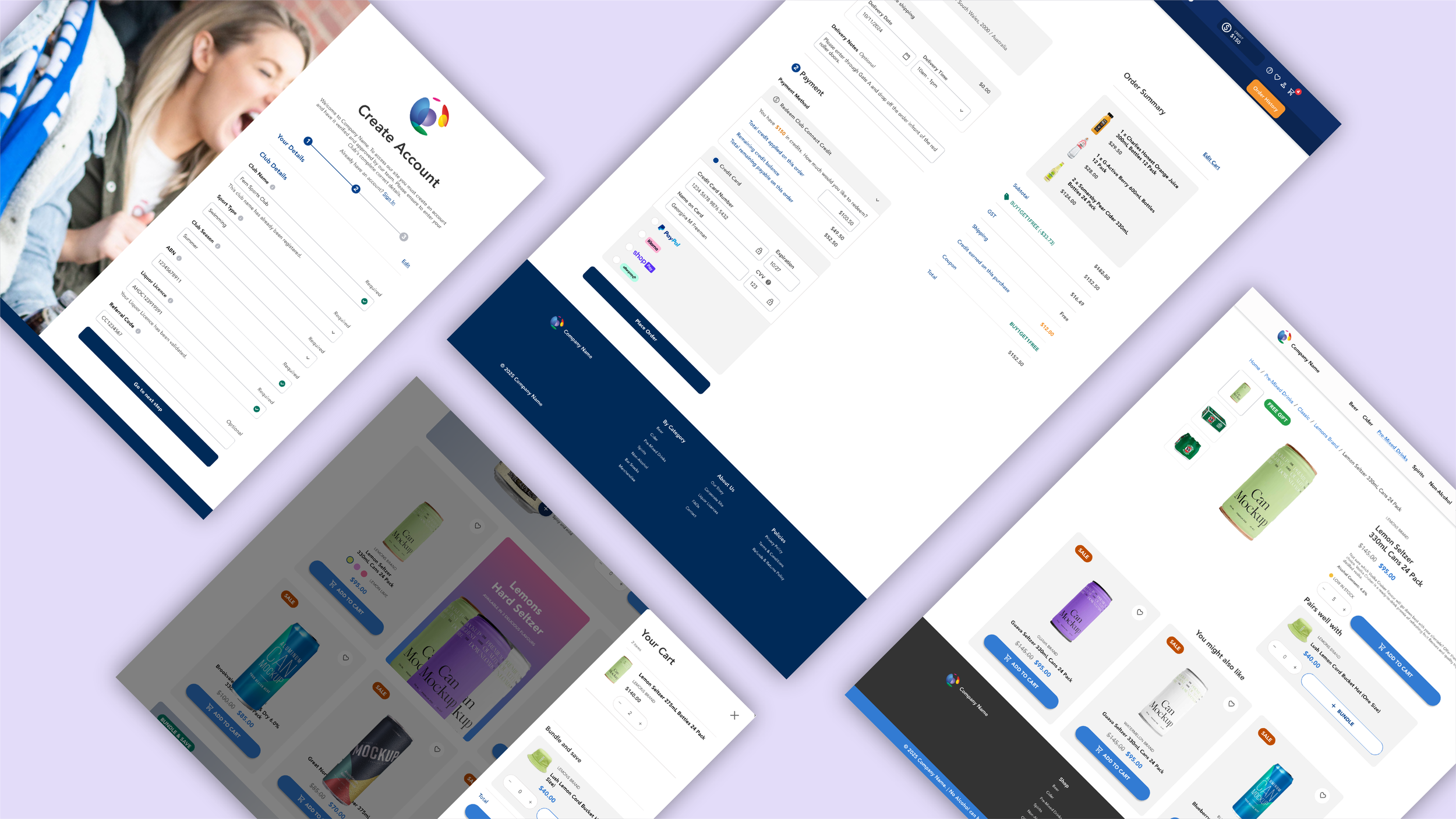
The impact
Enhanced customer experience: Delivered a unified platform with personalised catalogues, dynamic pricing, and automated rewards.
Operational efficiency: Reduced manual processes through shared integrations and centralised reporting.
Scalable architecture: Established a future-ready foundation leveraging the eCommerce solution’s capabilities.
Stakeholder alignment: Achieved consensus on design direction and implementation priorities through structured workshops and playback sessions.
Clear roadmap: Provided phased implementation options to support flexibility and budget alignment.